
Citations vs Backlinks: Where Evanston Businesses Should Spend First
zolqix
Zolqix Team
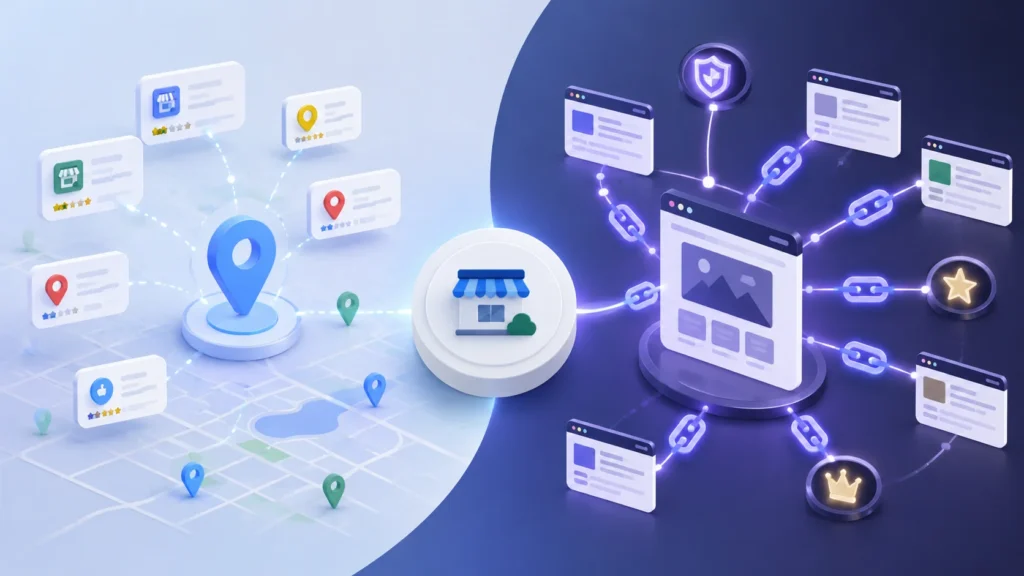
If you run a business in Evanston and you’re weighing citations vs backlinks, the short answer is this: for most local businesses, citations usually come first. Citations build the accurate, consistent foundation Google needs to trust your business. Backlinks come next, once that foundation is solid and you’re ready to compete on authority. This guide explains the difference, why the order matters, and which Evanston citation sources are worth your time.
Both citations and backlinks help you show up in local search, but they do different jobs. Spending on the wrong one first is a common way to waste money. Here’s how to get the order right.
What’s the difference between citations and backlinks?
Citations and backlinks are both signals from other websites. They work in different ways, so it helps to define each one clearly.
What a citation is
A citation is a mention of your business details on another website — usually your business name, address, and phone number (often called NAP). Most citations live in online directories like Google Business Profile, Apple Maps, Yelp, or a local chamber listing. A citation doesn’t always include a link. Its main job is to confirm that your business is real and that your details are the same everywhere. There are two rough types. Structured citations are listings in a directory with set fields. Unstructured citations are mentions in a blog post, news article, or community page. For example, if an Evanston plumber is listed on Yelp with the right name, address, and phone number, that’s a citation. If three directories show three different phone numbers, that’s a problem worth fixing.
What a backlink is
A backlink is a link from another website to yours. Search engines treat links a bit like recommendations. A link from a trusted, relevant site tells Google your pages are worth paying attention to. Backlinks can help both local rankings and regular (organic) rankings. A link from the Evanston Chamber of Commerce or a local news story usually carries more weight than a random link from an unrelated site. For example, if the Evanston RoundTable writes about your shop and links to your site, that’s a strong local backlink.
How citations and backlinks work together
Citations and backlinks aren’t rivals. They support each other. Citations make sure Google has the right facts about your business. Backlinks then build trust and authority on top of those facts. Think of citations as your business’s ID check, and backlinks as its reputation. You want both. You just want them in the right order. A strong reputation won’t help much if Google isn’t sure who or where you are. And a perfect set of listings won’t win a competitive search on its own. The two work best as a sequence: get found first, then get chosen.

Citations vs backlinks at a glance
| Factor | Citations | Backlinks |
|---|---|---|
| What it is | A mention of your name, address, and phone number on another site | A link from another website to yours |
| Main role | Confirms your details; supports local relevance and prominence | Builds authority; can lift local and organic rankings |
| Effort / cost | Usually lower; many are free or low-cost | Usually higher; good links take outreach or PR |
| Risk if done poorly | Inconsistent details can confuse Google and customers | Bought or spammy links can breach Google’s spam policies |
| Best first when | Your listings are missing, incomplete, or inconsistent | Your listings are solid and your niche is competitive |
Why citations usually come first for local businesses
For most Evanston businesses, citations are the sensible first spend. There are a few reasons.
- Foundation. Google wants to confirm your business details before it ranks you well. Consistent citations across trusted directories help it do that.
- Inconsistency hurts. Wrong or mismatched details — an old address here, a different phone number there — can confuse both Google and customers. Fixing that often brings quick, meaningful gains.
- Lower cost, faster. Many citations are free or low-cost, and you can build the core ones in a few weeks. Good backlinks usually take longer and cost more.
- They feed prominence. Google ranks local results on relevance, distance, and prominence. Accurate citations support relevance and prominence, which is where many local businesses have the most to gain early on.
This isn’t a hard rule. If your listings are already accurate and complete, more citations bring less benefit, and your time is better spent elsewhere. In plain terms, citations clear the way. Once Google is confident about your name, address, and phone number, everything else you do works harder.
Where backlinks fit in
Once your citations are solid, backlinks become one of the stronger levers for growth.
- They build authority. In competitive Evanston niches — dentists, law firms, or restaurants near downtown — authority is often what separates the top few results.
- Quality beats quantity. A handful of links from relevant, trusted local sites usually does more than dozens of low-quality ones.
- Local relevance matters. Links from Evanston and Chicago-area sources — local news, community groups, sponsorships, partner businesses — tend to help local rankings more than generic links.
- Avoid shortcuts. Don’t buy links or use link schemes. Google’s spam policies treat paid or manipulative links as a violation, and they can hurt you rather than help.
So how do you earn good links? Usually through real relationships and useful work. Sponsor a local event. Join a trade group and get listed. Publish a helpful guide other sites want to reference. Partner with nearby businesses. These take effort, but the links they produce are the kind Google rewards.
A simple priority order for Evanston businesses
Here’s a practical order most local businesses can follow.

- Claim and complete your Google Business Profile. It’s your most visible listing and the hub for local search.
- Get your NAP consistent. Make sure your business name, address, and phone number match exactly across your website and every listing.
- Build and fix your core citations. Cover the major platforms, then clean up duplicates and old listings.
- Add industry and local citations. Directories specific to your trade, plus Evanston-focused sources.
- Then invest in backlinks. With the foundation set, earn links through local PR, partnerships, sponsorships, and genuinely useful content.
You don’t have to finish each step before starting the next. But this order keeps you from paying for authority before Google can even trust your details.
A quick example. Say a new dental clinic opens near downtown Evanston. First, it claims and fills out its Google Business Profile. Next, it makes sure its name, address, and phone number match on its website, Yelp, and Apple Maps. Then it fixes a duplicate listing left over from the previous tenant. With the basics in place, it adds a listing in the Evanston Chamber of Commerce and a dental directory. Only then does it start earning links, like a sponsorship of a local school event or a mention in a community newsletter. Each step builds on the last.
Evanston citation sources worth pursuing
Here are the kinds of sources most Evanston businesses should look at. Confirm each one offers a business listing before you spend time on it, and keep your details identical across all of them. Work through them roughly in order: start with the platforms almost every business needs, then the aggregators, then the local sources that set you apart. You don’t need every directory. You need the right ones, all showing the same information.

The essentials (start here)
These are the listings almost every local business needs, so claim them first.
- Google Business Profile — the foundation for the local pack (the map and listings shown with it) and Google Maps.
- Apple Business Connect — your listing on Apple Maps, which matters for iPhone users.
- Bing Places, Facebook, and Yelp — widely used and easy to claim.
Data aggregators
A few large data providers feed business information to many other directories. Getting these right helps your details spread correctly, and it stops old information from resurfacing. Data Axle and Foursquare are two of the main ones to check.
General and trust directories
The Better Business Bureau and Yellow Pages are widely recognized. There are also directories specific to your trade, such as legal, medical, or home-services listings. A few strong, relevant ones beat a long list of generic sites.
Evanston-local sources
Local listings and mentions are especially useful. They tie your business to the Evanston area. A few worth checking:
- The Evanston Chamber of Commerce.
- The Downtown Evanston business district.
- The City of Evanston’s business resources.
- Local news and community sites, such as the Evanston RoundTable.
- Neighborhood and trade associations you already belong to.
Availability and listing rules change over time. Check each source before you rely on it, and make sure your details match what’s on your website.
How to check your current citations
Before you spend on anything, it helps to know where you stand.

- Search your business name in Google and see which listings appear.
- Search your phone number in quotes to find listings that use it.
- Note any listing with an old address, a wrong number, or a misspelled name.
- Look for duplicate listings, which often appear after a move or a rebrand.
A citation audit tool, or an audit from an agency, can do this faster and catch listings you’d miss. Either way, fixing what’s already wrong usually comes before adding anything new.
Common mistakes to avoid
- Buying backlinks before fixing citations. Authority means little if Google can’t confirm your basic details.
- Ignoring NAP consistency. Small mismatches across listings add up and quietly hold you back.
- Chasing Domain Authority. Domain Authority is a third-party score from Moz, not a Google ranking factor. Use it as a rough guide, not a target.
- Mass low-quality citations. Hundreds of spammy listings do little and can create duplicates to clean up later.
- Leaving old or duplicate listings live. These send mixed signals and confuse customers.
Frequently asked questions
Are citations or backlinks more important for local SEO?
It depends on where you’re starting. If your listings are incomplete or inconsistent, citations usually matter more first. If your foundation is solid and you’re in a competitive market, backlinks often make the bigger difference.
Do citations still matter in 2026?
Yes, though their role has shifted. Google uses many sources to confirm your business, so accurate, consistent citations still help. But once you have the basics, simply adding more brings less and less benefit.
How many citations does a business need?
There’s no fixed number. Focus on the major platforms, the main data aggregators, and a handful of strong local and industry sources — all with matching details. Quality and consistency matter more than volume.
What makes a good backlink for a local business?
Relevance and trust. A link from an Evanston or Chicago-area site, an industry publication, or a local organization you work with usually helps more than a generic link from an unrelated site. One genuinely relevant local link can be worth more than ten forgettable ones.
Can bad citations hurt my rankings?
They can. When your details don’t match across sites, Google gets less confident about your business, and that can weaken your local visibility. Cleaning up wrong or duplicate listings is often the fastest local SEO win.
How do I find where my business is already listed?
You can search your business name and phone number in Google, or run a citation audit. Many agencies offer one, and it shows where you appear and where your details don’t match.
The bottom line
For most Evanston businesses, the smart order is simple. Build an accurate citation foundation first, then invest in backlinks to compete on authority. Citations help Google trust your details. Backlinks help it see you as a leader in your market. Get the order right, and every dollar you spend works harder.
Not sure where your business stands? Zolqix offers a free local SEO audit that checks your citations, listings, and links, and shows what to fix first.
Written by
zolqix — Zolqix
Digital marketing team running local SEO, Google Ads, and growth campaigns for Chicago-area businesses. We write from what we see in active accounts.
Free — $500 value
Ready to rank
in Chicago?
Get a written audit showing exactly what’s holding back your local rankings. No call. No pitch.
No credit card • Written report within 24 hours • No obligation