
Citations vs Backlinks in Chicago: Where Local Businesses Should Spend First
zolqix
Zolqix Team
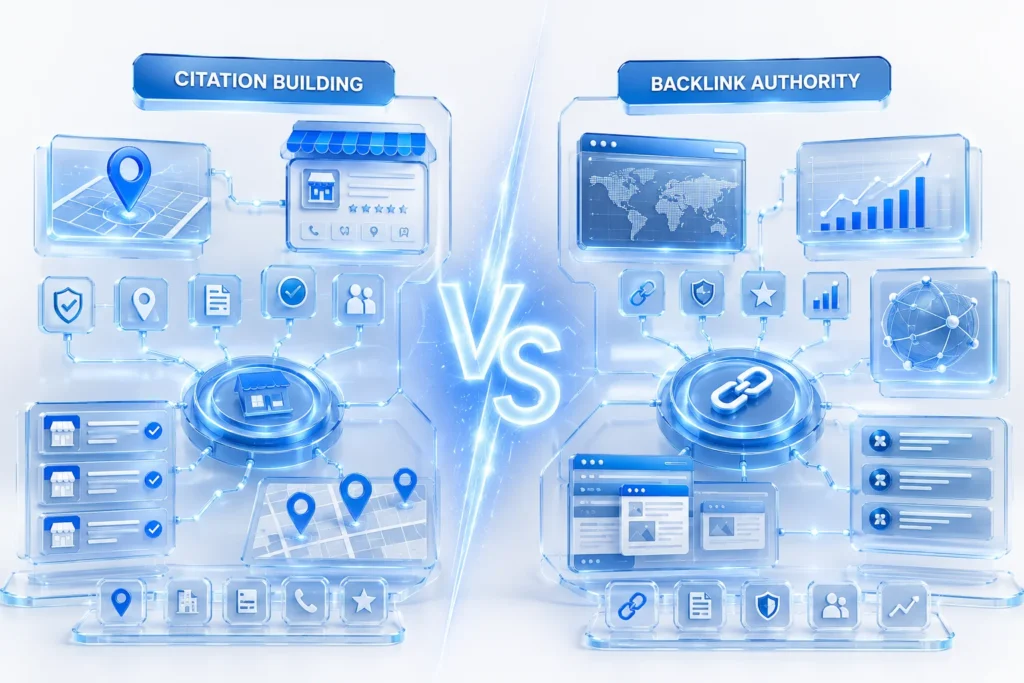
Citations vs backlinks in Chicago is one of the biggest Local SEO decisions for businesses competing in Google’s local search results.
Ask ten local SEO practitioners whether a Chicago business should prioritize citations or backlinks and you’ll get ten different answers. Most of them are either incomplete or wrong.
The correct answer is: it depends on where you are in your local SEO journey — but the sequence almost always runs citations first, backlinks second. Not because citations are more powerful, but because backlinks built on a foundation of broken NAP data and messy directory listings underperform relative to backlinks built on a clean, consistent citation profile.
This guide draws a precise line between citations and backlinks, explains what each does mechanically in Google’s local algorithm, shows where each has more or less impact in Chicago’s specific competitive environment, and provides a prioritized spending framework alongside the best Chicago-specific sources for both.If you’re new to Local SEO, start with our Local SEO Chicago Guide to understand how citations, backlinks, Google Business Profile, reviews, and content work together.
We’ve audited local SEO campaigns for Chicago businesses across categories including home services, legal, healthcare, and professional services. The patterns we describe — when citation cleanup produces fast wins, when link building is the true bottleneck, and when the answer is both simultaneously — come from that direct experience.
The one-sentence answer:
Fix your citations first (it’s cheaper, faster, and makes everything else work better), then invest in backlinks (which compound authority over time and separate you from competitors with similar citation profiles).
In Chicago’s most competitive categories, you need both — but the sequence matters.
What Are Citations? A Precise Definition
A citation is any online mention of your business’s Name, Address, and Phone number — collectively called NAP. Citations can appear with or without a link to your website. What matters is that your business information exists on a directory, review site, map service, news mention, or community resource.
The Two Types of Citations That Matter
- Structured citations: Listings in directories and databases where your business information is formatted in defined fields — Yelp, Apple Maps, Bing Places, the Chicago Chamber of Commerce member directory, industry-specific platforms like Houzz or Avvo. These are the citations most people think of when they hear ‘citation building.’
- Unstructured citations: Mentions of your business NAP in contexts that don’t use directory-style formatting — a Chicago Tribune business feature that names your address, a Block Club Chicago neighborhood article mentioning your phone number, a community organization website listing local businesses. These carry significant authority signals precisely because they’re editorial rather than self-submitted.
What Citations Do in Google’s Local Algorithm

Citations serve three functions in Google’s local ranking system:
- Entity verification: Google cross-references your NAP across multiple sources to confirm your business is real and located where you claim. The more corroborating sources that agree on your information, the higher Google’s confidence in your business entity — which translates directly into more stable, more prominent local pack rankings.Learn why inconsistent business information hurts rankings in our NAP Consistency Guide.
- Location signal amplification: Consistent citations from locally relevant Chicago sources (neighborhood BID websites, Chicago-specific directories, Cook County government databases) reinforce your geographic relevance for Chicago-specific searches. A Chicago electrician with citations from the Chicago Electrical Contractors Association and the Pilsen neighborhood SSA website sends stronger geographic signals than one with the same number of generic national directory listings.
- Prominence contribution: Google’s local algorithm explicitly includes online mentions as a prominence factor.Citation accuracy is only one ranking factor. See our complete Local SEO Ranking Factors Chicago guide to understand every signal Google uses. Citation volume and source authority both contribute — though accuracy matters far more than volume in 2026.
What Are Backlinks? A Precise Definition

A backlink is a hyperlink from another website pointing to your website. Unlike citations, backlinks must include an actual clickable link — a mention of your business name without a link is a citation, not a backlink. The distinction matters because backlinks and citations work through different mechanisms in Google’s algorithm.
What Backlinks Do in Google’s Algorithm
- Domain authority transfer: When an authoritative website links to yours, it transfers a portion of its authority to your domain. This is the PageRank concept that has underpinned Google’s algorithm since the beginning. A link from Crain’s Chicago Business to your website carries more authority than a link from a new blog with no traffic.Google explains how links help discover pages and understand website relationships in its official documentation.
- Topical relevance signals: Links from topically relevant sources carry additional relevance signals beyond pure authority. A link from the Chicago Bar Association website to a Chicago attorney’s site signals both authority and topical relevance. A link from a random unrelated site carries authority but no topical signal.
- Local authority building: Links from locally relevant Chicago sources — Crain’s Chicago Business, Chicago Tribune, Block Club Chicago, neighborhood organization websites, Chicago Chamber of Commerce — carry both authority and geographic relevance. These local editorial backlinks are among the most powerful signals for Chicago local pack rankings.
- Organic rankings influence: While local pack rankings are primarily driven by GBP signals, citations, reviews, and proximity, your website’s organic rankings — the traditional blue link results below the local pack — are significantly influenced by your backlink profile. For Chicago businesses competing in organic search as well as the local pack, backlinks are essential.
The Critical Difference: Citations Build Trust, Backlinks Build Authority

This distinction explains the sequencing question. Trust (citation consistency) is the foundation — without it, authority (backlinks) can’t fully express itself. A Chicago business with strong backlinks but messy NAP data has an authority ceiling imposed by trust deficit. Google can’t fully credit the backlinks if it’s uncertain about the entity receiving them.
Conversely, a business with perfect citation consistency but no backlinks has clean trust signals but limited authority — particularly for organic rankings and for standing out in competitive Chicago local packs where multiple businesses have similar citation profiles.
[ VISUAL: Citations vs Backlinks mechanism diagram — two parallel tracks showing Trust (citations → entity confidence → local pack) and Authority (backlinks → domain authority → organic + local prominence) ]
Alt text: “How citations build trust and backlinks build authority in Chicago local SEO — mechanism comparison”
The Core Differences: Citations vs Backlinks at a Glance

| Dimension | Citations | Backlinks |
| Definition | NAP mention — with or without a link | Clickable hyperlink from another website to yours |
| Primary mechanism | Entity trust and location verification | Domain authority and topical relevance transfer |
| Requires a link? | No — NAP mention is sufficient | Yes — must be a clickable hyperlink |
| Primary ranking impact | Local pack (map pack) and entity signals | Organic rankings and local prominence |
| Chicago-specific value | High — local directories amplify geographic signals | Very high — local editorial links are scarce and powerful |
| Speed of impact | 4–10 weeks after cleanup/aggregator updates | 2–6 months for authority to compound |
| Cost to build | Low — many Chicago sources are free or low-cost | Medium-High — editorial outreach requires time and relationships |
| Maintenance required | Ongoing monitoring for accuracy | Periodic gap analysis; links are generally permanent |
| Risk of getting wrong | Low — incorrect citations suppress rankings gradually | Medium — low-quality or manipulative links risk penalties |
| Where it appears in SERP | Local pack (map), Google Maps | Organic web results; indirectly supports local pack |
| Primary tool | BrightLocal, Whitespark, Moz Local | Ahrefs, Semrush, Moz Link Explorer |
| DIY feasibility | High — most Chicago citation sources are self-serve | Medium — editorial link building requires outreach skill |
| Priority order | First — fix before building links | Second — build after citations are clean |
Why Citations Come First in Chicago — The Sequencing Logic

The priority question — citations or backlinks first — has a clear answer for most Chicago businesses: citations first. Here’s the logic.
Broken Citations Undermine Backlink Value
When Google encounters a backlink pointing to your Chicago business’s website, it attempts to connect that link to a known entity in its Knowledge Graph. If your NAP data is inconsistent — old address on Yelp, name variation on Facebook, disconnected phone number on Apple Maps — Google’s entity resolution is uncertain. The backlink points to a domain, but the domain is associated with an entity Google doesn’t fully trust or recognize. The result: the backlink delivers less ranking benefit than it would for a business with clean entity signals.
We’ve seen this play out in Chicago audits repeatedly: businesses with 30–40 legitimate local backlinks stuck on page 2, while competitors with fewer backlinks but cleaner citation profiles hold page 1. The difference isn’t link volume — it’s entity confidence. Fix the citations and the existing backlinks start delivering their full value.
Citation Cleanup Is Faster and Cheaper Than Link Building
A complete citation audit and cleanup for a Chicago business — Tier 1 directories, aggregators, industry-specific directories, and Chicago local sources — takes 4–8 weeks and costs $400–$900 as a one-time project. Meaningful editorial link building in Chicago’s competitive market requires ongoing outreach, relationship development, and content creation — easily $500–$1,500/month over 6–12 months before the link profile reaches a competitive level.
The return on citation cleanup is fast (first ranking movements in 4–8 weeks) and disproportionately high relative to its cost. It’s the highest-ROI starting point for most Chicago businesses regardless of what comes next.
When Backlinks Should Come First
There are specific situations where investing in backlinks before (or simultaneously with) citations makes sense:
- Your citations are already clean: If you’ve recently launched a new Chicago business with a fresh GBP, verified NAP, and consistent Tier 1 directory presence, there’s no cleanup needed — link building can start immediately.
- You’re in organic search competition primarily: If your primary goal is organic page 1 rankings (not just local pack) for competitive Chicago keywords, backlinks are the primary lever and shouldn’t wait for citation cleanup to complete.
- Your citations are clean but you’ve plateaued in the local pack: When a Chicago business has solid NAP consistency and reviews but can’t break into the top 3 despite good GBP optimization, local backlinks from Chicago-specific authoritative sources are often the signal that tips the balance.
The practical decision tree for Chicago businesses:
Step 1: Run a citation audit (BrightLocal free trial). Is your NAP consistency score below 80%? → Fix citations first.
Step 2: Check your backlink profile (Moz free or Ahrefs). Do your top local pack competitors have significantly more local backlinks? → Link building is the bottleneck.
Step 3: Are both your citation profile and backlink profile weaker than competitors? → Do citation cleanup first (it’s faster), then begin link building at month 2–3.
The Chicago Citation Priority Framework

Not all citations carry equal weight for Chicago local SEO. Here’s the complete prioritized list — organized by impact, with specific Chicago sources at each tier.
Tier 1 — Universal Platforms: Fix These First, No Exceptions
These are the most indexed, most visible, and most influential citation sources for any Chicago business. Inconsistencies here cause the most damage. Corrections here produce the fastest improvement. Every Chicago business must have accurate, complete listings on all five before building anything else.
| Platform | Why It Matters | How to Claim/Fix | Chicago-Specific Note |
| Google Business Profile | Primary local pack signal — everything feeds into this | business.google.com | Primary category selection is critical — Chicago competition is high enough that wrong category = no rankings |
| Apple Maps | Default map on all iPhone and Siri searches | businessconnect.apple.com | High iPhone penetration in Chicago metro makes this a major traffic source |
| Bing Places | Powers Bing + Cortana — significant 35–55 demographic | bingplaces.com | Chicago’s large professional population uses Bing at work (Office 365 default) |
| Yelp | High DA, heavily indexed, review influence | biz.yelp.com | Yelp is stronger in Chicago than most US cities — restaurant and service categories especially |
| Facebook Business | Social trust signal + citation source | Facebook Page settings | NAP must match GBP exactly — character for character |
Your Google Business Profile is the foundation of every citation strategy. Here’s our complete Google Business Profile Optimization Guide.
Tier 2 — Aggregators: Cascade Fixes to Hundreds of Directories
Data aggregators collect business information and distribute it to hundreds of downstream directories. Fixing your NAP at the aggregator level is the single highest-leverage citation move available. One correction cascades automatically to dozens of directories that would otherwise require individual manual fixes.
| Aggregator | What It Powers | How to Update |
| Data Axle (InfoUSA) | Hundreds of directories, GPS systems, voice assistants, smart home devices | Submit via BrightLocal integration or directly at data-axle.com — cascade takes 4–8 weeks |
| Neustar Localeze | Bing Maps, navigation systems, local data partners | localeze.com — claim and update; cascade 6–12 weeks |
| Foursquare / Factual | Tens of millions of apps, Snapchat Maps, Uber, enterprise data products | foursquare.com/business — the most underestimated aggregator in terms of downstream reach |
Aggregator timing reality: After fixing Data Axle and Neustar Localeze, allow 8–12 weeks before re-auditing downstream directories. Some auto-update from the aggregator feed within weeks; others take longer or require manual correction even after the aggregator is fixed. Don’t conclude your cleanup failed because a directory still shows old data at week 6 — check again at week 12.
Tier 3 — Industry-Specific: High Authority Within Your Category
These directories carry significant authority within specific verticals. A Chicago HVAC company listed on ACCA and Angi gets both citation value and category-specific relevance signals that generic directories can’t provide.
| Category | Key Industry Directories | Why These Matter |
| Home Services | Angi, HomeAdvisor, Houzz, Thumbtack, BuildZoom | High purchase intent traffic + strong domain authority + category relevance signals |
| Legal | Avvo, FindLaw, Justia, Martindale-Hubbell, lawyers.com | Legal directories are indexed heavily for attorney searches; Google trusts them for entity verification |
| Healthcare | Healthgrades, Zocdoc, WebMD, Vitals, US News Health | Patient discovery + entity verification for medical professionals; insurance plan directories |
| Restaurants | OpenTable, TripAdvisor, Zomato, Yelp (also Tier 1) | High search volume category; multiple platforms each drive meaningful Chicago dining traffic |
| Real Estate | Zillow, Realtor.com, Trulia, Homes.com | National aggregators dominate local pack for real estate; organic citations here are the primary channel |
| Financial Services | FINRA BrokerCheck, CFP Board, NAPFA, state licensing boards | Trust-critical category where government and professional body citations carry exceptional authority |
| Auto Services | RepairPal, CarGurus Service, AutoMD | Chicago’s large commuter population makes auto service citations high-traffic sources |
Tier 4 — Chicago Local: Highest Geographic Relevance, Hardest to Replicate

This is where Chicago citation strategy diverges most sharply from generic local SEO advice. These are the sources that carry the most local relevance for Chicago businesses — and that out-of-market competitors can’t replicate because they require genuine Chicago presence and community engagement.
| Chicago Citation Source | Type | Authority Level | How to Get Listed |
| Chicago Chamber of Commerce | Citation + editorial link | Very High | Join as a member — directory listing and potential feature articles |
| Illinois Chamber of Commerce | Citation + state directory | High | Statewide membership — adds Illinois-level entity signal |
| Chicago SBDC (Small Business Development Center) | Citation + government-adjacent | High | Register as a client or attend events — free listing |
| SCORE Chicago Chapter | Citation + nonprofit directory | High | Register with local chapter — free listing and mentorship resources |
| BBB Chicago and Northern Illinois | Citation + trust signal | High | Claim free listing; accreditation adds enhanced trust signals |
| Chicago Tribune business directories | Unstructured press citation | Very High | PR outreach for features, roundups, or neighborhood business stories |
| Crain’s Chicago Business | Unstructured editorial citation | Extremely High | PR outreach to reporters covering your industry category |
| Block Club Chicago | Unstructured neighborhood citation | High | Hyper-local news covering Chicago neighborhoods — strong for neighborhood-specific rankings |
| Neighborhood BID / SSA websites | Hyper-local citation | High | Each of Chicago’s 77 neighborhoods has Business Improvement Districts and Special Service Areas with member directories |
| Chicago Tribune Community publications | Community press citation | Medium-High | Suburban editions covering specific Chicago neighborhoods and nearby communities |
| Illinois Secretary of State business registry | Government citation | High | Automatic if incorporated in Illinois — ensure your listed address is current |
| Illinois DCEO (Dept of Commerce) directories | Government citation | High | Business resource directories maintained by state economic development |
| City of Chicago business license database | Government citation | High | Automatic if you hold a Chicago business license — verify your listed information |
| Chicago Public Library business resource listings | Community citation | Medium | Some CPL branches maintain local business resource directories |
| Neighborhood-specific community sites | Hyper-local citation | Medium-High | Rogers Park Business Alliance, Pilsen Business Alliance, Wicker Park-Bucktown SSA, etc. |
The Tier 4 advantage in Chicago: National SEO guides list generic citation sources that any US business can access. Chicago’s Tier 4 sources — neighborhood SSA websites, Block Club Chicago mentions, Crain’s Chicago Business features, neighborhood BID directories — require genuine Chicago presence and community engagement. A business based in Denver can’t get a Pilsen Business Alliance citation. This is exactly why these sources carry more local authority than generic directories: they’re verifiable evidence of Chicago-specific presence.
The Chicago Backlink Priority Framework

Chicago has a rich ecosystem of authoritative local link sources — but most businesses don’t systematically pursue them. Here’s the complete framework for building a Chicago-relevant backlink profile, ordered by authority and achievability.
Why Chicago Backlinks Are Different From Generic Link Building
Generic SEO advice focuses on domain authority (DA) as the primary backlink metric. For Chicago local SEO, a more useful metric is Local Authority — the combination of DA, topical relevance to your category, and geographic relevance to Chicago. A DA 40 link from the Rogers Park Business Alliance is more valuable for a Rogers Park business than a DA 60 link from a national technology blog, because the Rogers Park link carries both authority and hyper-local geographic signal.
This doesn’t mean domain authority doesn’t matter — it does. But in Chicago local SEO, the combination of authority + local relevance + topical relevance is what produces ranking movement. Generic high-DA links that lack Chicago context contribute to organic authority but don’t specifically amplify local pack signals the way locally-relevant links do.
Chicago Backlink Sources by Category

Tier A: Highest Authority Chicago Links
These are the links that produce the most significant authority transfer. They’re also the hardest to earn — but for Chicago businesses in competitive categories, one or two of these can move rankings more than dozens of lower-authority links.
- Crain’s Chicago Business (chicagobusiness.com): One of the highest-authority local business publications in the Midwest. Links come from editorial coverage — industry roundups, company features, business trend articles. Approach: develop relationships with reporters covering your industry beat. DA 75+, extremely high local relevance.
- Chicago Tribune (chicagotribune.com): Illinois’s largest newspaper and one of the highest-DA local news sources in the country. Links from Tribune coverage — local business features, neighborhood stories, ‘best of’ roundups. Approach: PR outreach to business and neighborhood desk reporters. DA 90+.
- WGN News / ABC7 Chicago / NBC5 Chicago: Local broadcast network websites with very high DA and Chicago-specific authority. Links come from TV segment coverage or online-only business stories. Approach: pitch local business angle stories with community relevance. DA 80–90+.
- Sun-Times (suntimes.com): Strong DA, significant Chicago readership, particularly strong in Chicago’s South Side and working-class neighborhoods. DA 70+.
Tier B: High-Authority Chicago Links
- Block Club Chicago (blockclubchicago.org): The most neighborhood-focused Chicago news outlet. Coverage is hyper-local — individual Chicago neighborhoods, local business openings, community stories. Links from Block Club carry strong neighborhood-level geographic signal. DA 60+. Approach: pitch neighborhood-specific stories about your business or community involvement.
- Chicago Magazine (chicagomag.com): High-authority lifestyle and culture publication with strong DA and affluent readership. Best for restaurants, retail, entertainment, wellness, and professional services. DA 65+.
- Chicago Business Alliance / Chicago Chamber of Commerce (chicagochamber.org): Member directory links plus potential editorial links from Chamber communications. Membership is the entry point. DA 55+.
- Neighborhood Business Improvement Districts (BIDs) and SSAs: Each of Chicago’s 77 neighborhoods has active BID and SSA organizations with websites. Links from Andersonville Chamber, Wicker Park-Bucktown SSA, Pilsen Business Alliance, Rogers Park Business Alliance, etc. carry strong hyper-local signals. DA varies (35–60), but local relevance is very high.
Tier C: Valuable Chicago Links
- Chicago event sponsorships: Sponsoring Chicago neighborhood festivals (Chicago Blues Festival adjacent events, Andersonville Midsommarfest, Pilsen Mural Tour), community fundraisers, or professional association events typically earns a sponsor link from the event website. DA varies widely, but local relevance is high.
- University and college affiliate listings: Businesses serving or partnering with University of Chicago, Northwestern University, Loyola Chicago, DePaul, UIC, or Columbia College Chicago may qualify for supplier, partner, or affiliate directory listings. Edu links carry exceptional authority.
- Chicago professional associations: Illinois State Bar Association, Illinois Medical Society, Illinois Contractors Association, Illinois Restaurant Association — each maintains member directories with linked listings. DA 50–70+ with strong topical relevance.
- Illinois government directories: State licensing boards, the Illinois Secretary of State business database, IDFPR license lookup — government domain citations that also function as backlinks. DA 70–85.
| Chicago Link Source | DA Range | Local Relevance | How to Earn It |
| Crain’s Chicago Business | 75+ | Very High | PR outreach — industry angle stories, business features |
| Chicago Tribune | 90+ | Very High | PR outreach — neighborhood and business desk reporters |
| Block Club Chicago | 60+ | Extremely High | Pitch hyperlocal neighborhood stories |
| Chicago Magazine | 65+ | High | Pitch to lifestyle/dining/professional services editors |
| Chicago Chamber of Commerce | 55+ | High | Join as member — directory + editorial opportunities |
| Neighborhood BID/SSA sites | 35–60 | Extremely High | Join local BID or SSA — member directory listing |
| Illinois State Bar (attorneys) | 65+ | Very High (legal) | ISBA membership — member directory listing |
| Illinois Medical Society (healthcare) | 60+ | Very High (medical) | IMS membership — member directory listing |
| Chicago university affiliates | 70–90 | High | Supplier/partner relationship with institution |
| Local event sponsorships | 30–55 | High | Sponsor neighborhood festivals and community events |
| WGN/ABC7/NBC5 Chicago | 80–90+ | Very High | PR — pitch TV-worthy local business stories |
| Chicago Sun-Times | 70+ | Very High | PR outreach — neighborhood and local business beats |
Competitor Gap Analysis: The Most Efficient Path to Both

The most efficient way to identify your highest-priority citations and backlinks is not to build from a generic list — it’s to audit what your top Chicago competitors already have that you don’t.
How to Run a Citation Gap Analysis
- Use BrightLocal’s Citation Tracker to audit your current citation profile — which directories list you and which have NAP inconsistencies
- Identify your top 3 Chicago local pack competitors for your primary keyword
- Run their business names through BrightLocal’s Citation Finder — see which directories list them that don’t list you
- Prioritize the gap directories by Tier (Tier 1 gaps are most urgent, Tier 4 Chicago-local gaps are most strategically valuable)
- Build the high-priority missing citations and add them to your monitoring list
How to Run a Backlink Gap Analysis
- Enter your domain into Ahrefs’ Site Explorer or Semrush’s Backlink Analytics
- Note the number of referring domains and identify the highest-authority Chicago-specific links you have
- Enter each top competitor’s domain into the same tools
- Use Ahrefs’ Link Intersect or Semrush’s Backlink Gap tool — enter your domain and 2–3 competitors
- Filter results to show sites linking to competitors but not to you — sorted by DR (Domain Rating) or DA
- Prioritize the list: Chicago-local sources with high DA go to the top of your outreach list
The fastest win in competitor gap analysis: Look specifically for Chicago Tier 4 sources — neighborhood BID sites, Chicago Chamber, local press — that your competitors have but you don’t. These are the links that carry the most local signal and are often achievable through straightforward membership or outreach, not complex editorial pitching.
The Chicago Citations vs Backlinks Decision Matrix

Use this matrix to determine the right immediate priority for your specific situation.
| Your Situation | Primary Priority | Secondary Priority |
| New Chicago business (< 6 months old) | Citations — build Tier 1–3 clean from day one | Backlinks — Chamber and BID memberships can start immediately |
| Existing business, messy NAP, no link building | Citations first — cleanup before anything else | Backlinks — start after 60 days of citation cleanup |
| Clean citations, stuck in local pack positions 4–10 | Backlinks — this is the bottleneck | Content — support backlinks with targetable pages |
| Inconsistent NAP + no backlinks (most common) | Citations first (fastest ROI, cleanest foundation) | Backlinks — begin at month 2–3 while citations propagate |
| Competing for organic page 1 (not just local pack) | Backlinks — organic rankings are primarily link-driven | Content — backlinks need pages worth linking to |
| Strong local pack, weak organic | Backlinks + Content — organic requires both | Technical SEO — ensure site is crawlable and fast |
| Plateau after 9+ months of consistent local SEO | Backlinks — citations are likely already solid | Content clusters — topical authority to support both |
| Multiple Chicago neighborhood targeting | Both simultaneously — citations per location, links from each neighborhood | GBP service area optimization per neighborhood |
Common Chicago SEO Mistakes: Citations and Backlinks
Mistake 1: Building Backlinks Before Fixing Citations
The most common sequencing error we see in Chicago SEO campaigns. A business invests in link building from local press and associations before auditing its citation profile. The links get built — but they’re pointing to a domain with uncertain entity signals. The authority transfer is partially blocked by the trust deficit created by inconsistent NAP data. Fix citations first, then build links onto a clean foundation.
Mistake 2: Treating Citation Volume as the Goal
Submitting to 300 directories doesn’t produce 10x the result of submitting to 30. In 2026, citation accuracy and source authority matter far more than raw count. A Chicago business with 40 clean, accurate citations on high-authority sources consistently outperforms one with 200 citations on low-quality directories, many of which contain NAP variations.
Mistake 3: Ignoring Tier 4 Chicago-Specific Sources
Most Chicago businesses have Yelp and Facebook covered. Far fewer have citations from their neighborhood BID, a feature in Block Club Chicago, or a listing in the Chicago Chamber member directory. These Tier 4 sources carry disproportionate local relevance precisely because they’re harder to get and more genuinely Chicago-specific. They’re the differentiation layer that separates businesses with similar Tier 1–3 profiles.
Mistake 4: Buying Link Packages for a Local Business
Purchased link packages — bulk directory submissions, private blog network (PBN) links, link farms — are policy violations that risk Google manual penalties. For a Chicago local business that depends on Google Maps and local search for the majority of its leads, a manual penalty is potentially catastrophic. Local link building should be manual, editorial, and relationship-driven. There are no shortcuts worth the risk.
Mistake 5: Not Monitoring for New Citation Inconsistencies
Citation cleanup is not a one-time project. New incorrect citations get created automatically: data aggregators push old information that resurfaces months after you corrected it, directories create auto-generated listings from public data, and anyone can suggest edits to your GBP. Set up BrightLocal Citation Tracker for ongoing monitoring and check your GBP for unauthorized edits at least weekly.
A Chicago-specific citation hazard: Businesses near Chicago neighborhood boundaries — Wicker Park / Bucktown, Rogers Park / Edgewater, Pilsen / Little Village — sometimes get auto-assigned to the wrong neighborhood by directory aggregators. A business at the edge of Rogers Park might be listed as Edgewater in some sources. This geographic mismatch creates entity ambiguity for the neighborhood-level local pack. Always verify neighborhood (not just city) accuracy in your citation audit.
Frequently Asked Questions
What is the difference between citations and backlinks in local SEO?
A citation is any online mention of your business’s Name, Address, and Phone number (NAP) — with or without a link to your website. Citations build entity trust: Google cross-references NAP across directories and community sources to verify your business is real and correctly located. A backlink is a clickable hyperlink from another website to yours. Backlinks build domain authority: they transfer ranking power from the linking site to yours. For Chicago local businesses, citations primarily influence local pack (map) rankings through entity signals, while backlinks influence both organic rankings and local pack prominence. Both matter — but they work through different mechanisms and require different strategies.
Which is more important for Chicago local SEO — citations or backlinks?
In the early stages of local SEO for a Chicago business, citation accuracy has the higher immediate impact — it’s faster to achieve, cheaper to implement, and produces measurable ranking movement within 4–10 weeks. As a Chicago business matures past the foundation stage, backlinks become the primary differentiator: when multiple Chicago competitors have similar GBP optimization and citation profiles, local backlinks from authoritative Chicago sources (Crain’s Chicago Business, neighborhood BID sites, professional associations) are often what separates the top-3 local pack from positions 4–10. The honest answer is that both are necessary — but citations should come first for most Chicago businesses.
What are the best citation sources for Chicago businesses?
The highest-value Chicago citation sources, in priority order: Tier 1 universals (Google Business Profile, Apple Maps, Bing Places, Yelp, Facebook) — non-negotiable foundation. Tier 2 aggregators (Data Axle, Neustar Localeze, Foursquare) — fix these to cascade corrections downstream. Tier 3 industry-specific (Houzz, Healthgrades, Avvo, Angi, depending on category) — high-authority category signals. Tier 4 Chicago-local (Chicago Chamber of Commerce, neighborhood BID and SSA websites, BBB Chicago, Block Club Chicago mentions, Crain’s Chicago Business features, Illinois Secretary of State registry, City of Chicago business license database) — the highest local relevance and the hardest to replicate. Tier 4 sources are where the real Chicago citation advantage lives.
How do I build backlinks for my Chicago local business?
The most effective Chicago local backlink strategy combines three approaches: community membership (Chicago Chamber of Commerce, neighborhood BID, professional associations — all provide directory links as part of membership), event sponsorship (Chicago neighborhood festivals, charity events, community fundraisers typically earn sponsor links from event websites), and editorial PR outreach (pitching neighborhood-specific stories to Block Club Chicago, industry trends to Crain’s Chicago Business, local business features to Chicago Tribune neighborhood desks). Start with membership-based links — they’re the most achievable and most consistent. Move to editorial PR as you develop relationships with Chicago journalists and local media. Always prioritize Chicago-relevant sources over generic high-DA sites: local relevance amplifies the authority signal for map pack purposes.
Should I fix citations before building backlinks?
Yes, for most Chicago businesses. Backlinks built on a foundation of inconsistent NAP data underperform because Google’s entity resolution is uncertain — the link points to a domain associated with an entity Google doesn’t fully trust. Fixing citations first establishes clean entity signals, then backlinks can deliver their full authority transfer. The exception: if your citations are already clean (high consistency score in BrightLocal) and your local pack plateau is clearly caused by a weak backlink profile relative to competitors, start link building immediately without waiting for citation work that isn’t needed. The diagnostic step — running both a citation audit and a backlink gap analysis against your top local competitors — takes the guesswork out of which to prioritize.
How many citations does a Chicago business need?
There’s no magic number — accuracy and source authority matter far more than count. For most Chicago service businesses, a complete presence across Tier 1 (5 platforms) and Tier 2 aggregators (3 platforms), plus 5–10 relevant Tier 3 industry directories and 5–10 Tier 4 Chicago-local sources, produces a citation profile that supports strong local pack performance. That’s roughly 25–30 high-quality citations rather than hundreds of low-quality ones. In highly competitive Chicago categories (legal, HVAC, healthcare), expanding to 40–60 quality citations — including multiple Tier 4 Chicago-specific sources — becomes more important as competitors have similar Tier 1–3 profiles and Tier 4 differentiation matters more.
Can citations hurt my Chicago local rankings?
Incorrect citations can. The most damaging scenarios: old addresses from a previous location persisting on dozens of directories (creates location ambiguity); business name variations across sources (creates entity resolution uncertainty); duplicate GBP listings (splits signals and confuses Google about which listing to rank); city name errors for businesses near Chicago neighborhood boundaries (places you in the wrong geographic entity). These suppress rankings gradually rather than dramatically — which is why many businesses don’t connect their citation problems to their ranking plateau. The fix is a full citation audit, not guesswork about which specific inconsistency is causing the most damage.
How long does it take for citation fixes to affect Chicago local rankings?
Tier 1 platform corrections (Google, Yelp, Apple Maps) typically produce initial ranking movement within 4–8 weeks — fast because these platforms are crawled and indexed frequently. Aggregator corrections (Data Axle, Neustar Localeze) take 8–12 weeks to cascade to downstream directories. Full citation profile stabilization — where all major inconsistencies are resolved and Google has re-crawled enough sources to update its entity confidence — takes 3–5 months. The good news: for Chicago businesses in low-to-moderate competition categories, citation cleanup alone (combined with an optimized GBP) often produces enough ranking movement to reach the local pack top 3 without active link building — which means the ROI on citation cleanup is often faster and clearer than on link building.
What is the best tool for citation auditing and backlink analysis for Chicago businesses?
For citations: BrightLocal is the industry standard — comprehensive audit, NAP accuracy scoring, local rank tracking, and citation monitoring in one platform ($39–$49/month). Whitespark Citation Finder is stronger for identifying new Chicago-specific citation opportunities. For backlinks: Ahrefs and Semrush both provide comprehensive backlink analysis; Ahrefs is generally considered stronger for backlink data specifically. Moz Link Explorer is a lower-cost alternative with reliable DA scoring. For day-to-day monitoring without paid tools: Google Search Console shows referring domains that link to your site, and a free Moz Local scan surfaces citation inconsistencies across major platforms.

The Bottom Line: Citation and Backlink Priority for Chicago Businesses
The citations vs backlinks question has a clear answer for most Chicago businesses: fix citations first, build backlinks on top of a clean foundation.
But the more useful framing is not ‘which one?’ — it’s ‘which one now, and when do I add the other?’ Both are necessary for competing in Chicago’s dense, high-velocity local search environment. Citations build the trust foundation that makes your other signals credible. Backlinks build the authority that separates you from competitors with similar trust profiles.
In Chicago’s most competitive categories — personal injury law, HVAC, dental, urgent care — businesses holding top-3 local pack positions almost invariably have both: clean, consistent citations across all four tiers including Chicago-specific Tier 4 sources, and a meaningful backlink profile built from editorially-earned Chicago-relevant links.
The sequence: audit first, clean citations, then build links. The goal: a local search presence strong enough that competitors can’t displace you without doing years of work.
Get Your Free Chicago Citation and Backlink Audit
We’ll audit your full citation profile (NAP consistency score, Tier 1–4 gaps, Chicago-specific missing sources) and your backlink profile (referring domains, competitor gap, Chicago-local link opportunities) — and deliver a prioritized action plan for both. Delivered within 48 hours. No obligation.
Request Your Free Audit at zolqix.com
Schedule a Free Chicago Local SEO Strategy Call
Talk to a specialist about your specific category, your current citation and backlink profile, and the right sequence for your Chicago market. We’ll give you a straight answer on what to do first.
Book Your Free 30-Minute Call at zolqix.com
Questions? Contact us at hello@zolqix.com or visit zolqix.com
Last updated: June 2026 | Published by Zolqix Digital — Chicago Local SEO Agency | zolqix.com
Written by
zolqix — Zolqix
Digital marketing team running local SEO, Google Ads, and growth campaigns for Chicago-area businesses. We write from what we see in active accounts.
Free — $500 value
Ready to rank
in Chicago?
Get a written audit showing exactly what’s holding back your local rankings. No call. No pitch.
No credit card • Written report within 24 hours • No obligation