
Why You’re Stuck on Page 2 of Google in Naperville
zolqix
Zolqix Team

Page 2 of Google is the digital equivalent of a storefront on a street nobody walks down. Click-through studies consistently show that the first page captures the overwhelming majority of search clicks, while page 2 collects almost nothing.
If your business sits on page 2, you’re effectively invisible to most people searching for what you offer. The good news is more encouraging than it feels right now.
In our experience auditing local businesses across home services, legal, healthcare, and retail, the gap between page 2 and page 1 almost always comes down to one or two specific, fixable problems — not a full rebuild.
This guide walks through the most common reasons companies in the area get stuck on page 2, how to diagnose your exact situation, and the precise fixes that move rankings. We’ll also cover what makes the Naperville search landscape different from Chicago proper, because a strategy built for a dense urban market doesn’t always translate to a suburban one.
Most businesses land on page 2 of Google in Naperville because of one or two fixable issues — usually thin website content, weak on-page SEO, too few local backlinks, technical problems, or an underoptimized Google Business Profile. Diagnose the specific cause, fix it in priority order, and page 1 is realistic within weeks for low-competition categories and a few months for tougher ones.
Key Takeaways
- Page 2 is rarely a bad website problem.
- Most businesses are only one or two fixes away from page 1.
- Thin content and weak on-page SEO are the most common causes.
- Google Search Console helps identify your easiest ranking opportunities.
- Naperville is less competitive than Chicago, making page 1 more achievable.
- Title tags and Google Business Profile optimization often deliver the fastest improvements.
The 7 Reasons Local Businesses Get Stuck on Page 2
Google ranks pages on hundreds of signals. For a local business, though, a page-2 ranking almost always traces back to one or more of these seven root causes.
| Root Cause | What It Means in Practice |
|---|---|
| Weak or thin website content | Google can’t tell what you do or who you serve |
| Missing or misaligned on-page SEO | Title tags, headers, and meta descriptions don’t signal relevance |
| Low domain authority / few backlinks | Google doesn’t trust your site enough to rank it prominently |
| Technical SEO issues | Slow load times, crawl errors, or a poor mobile experience |
| Better-optimized competitors | Page 1 is held by businesses doing more of the right things |
| Underoptimized Google Business Profile | A weak profile drags down local organic and map pack rankings |
| Wrong keyword targets | Chasing terms nobody searches, or terms too competitive to win |

Your first job is figuring out which of these applies to you. Treating the wrong problem is the single most common reason businesses spin their wheels for months. Let’s work through each one.
Reason 1 — Thin Website Content Confuses Google
This is the issue we identify most often. Learn more about our Local SEO services for businesses looking to improve local rankings. If your pages don’t give it enough to understand what you do, who you serve, and where you operate, it can’t rank you with confidence.
What Thin Content Looks Like
- A homepage with 200–300 words and a contact form
- Service pages that list services without actually explaining them
- No mention of Naperville, specific neighborhoods, or the wider DuPage County area
- No FAQ section, no “how it works,” no local context
- Several services crammed onto one page instead of a dedicated page each
A roofing contractor serving the local area may struggle because roof repair, roof replacement, and inspections all live on a single “Services” page. A competitor that gives each of those its own detailed page — with pricing context, timelines, and Naperville references — gives Google three strong, specific pages to rank instead of one vague one. That’s often the entire difference between page 2 and page 1.
What Google Expects to See
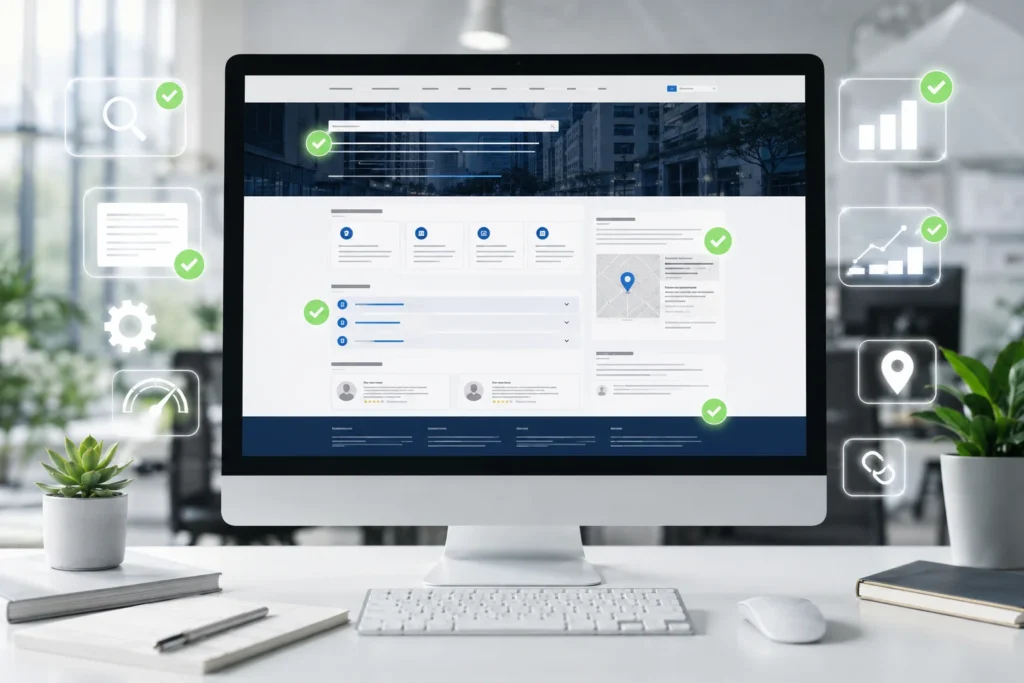
To rank on page 1 for service-related queries, Google generally wants:
- Dedicated pages per service. One page per core service, each with 600–1,000+ words of original, specific content. A plumbing company shouldn’t bundle “drain cleaning, water heater repair, sump pump installation” onto one page—each deserves its own. Creating a clear service-page structure is a key part of an SEO-friendly website. Our Website Design Services focus on building websites that organize content effectively for both visitors and search engines.
- Local signals woven in naturally. References to Naperville, DuPage County context, neighborhoods (Downtown Naperville, North Naperville, South Naperville), and nearby communities you serve (Aurora, Bolingbrook, Lisle, Wheaton).
- Answers to real customer questions. What does it cost? How long does it take? What should I look for when choosing a provider? The pages on page 1 are usually the ones answering these directly.
- E-E-A-T signals. Who runs the business? What are their credentials? How long have they served the area? Google’s quality evaluators look for evidence that real, experienced people stand behind the content.
Search your primary service keyword + “Naperville.” Open the top three results. How long are their pages? How detailed? How many questions do they answer? That’s the standard you’re competing against.
Don’t match your competitors’ word count — match their usefulness. A 700-word page that answers the five questions buyers actually ask will outperform a padded 1,500-word page that says nothing specific.
Reason 2 — On-Page SEO Signals Are Missing or Misaligned
On-page SEO is the set of signals on each page that tell Google what the page is about. It’s foundational. In a moderately competitive suburban market, getting it wrong keeps you on page 2 while better-optimized rivals hold page 1. Google’s Search Central documentation explains how search engines evaluate helpful, well-structured pages and why on-page optimization remains an essential ranking factor.
The On-Page Mistakes We See Most Often
- A weak or missing title tag. This is the single most important on-page element. “Home | Smith Plumbing” tells Google almost nothing. A title that names the service and the city tells it exactly what you do and where.
- A generic H1. Your main headline should match the page’s primary keyword. If a plumbing service page says “Our Services,” that’s a wasted signal.
- No meta description. It won’t directly move rankings, but it shapes click-through rate — which does matter. A compelling description earns more clicks even from a page-2 position.
- The keyword missing from the first paragraph. Google weights early content more heavily. Your primary term should appear naturally within the first 100 words.
- No internal links. Pages that nothing links to get crawled less and receive less authority. Every service page should be linked from your homepage and from related pages.
- Missing or broken schema markup. LocalBusiness schema hands Google your business type, location, hours, and contact details in a structured format. Missing schema is a lost opportunity; broken schema is worse than none.
Here’s the difference a properly written title tag makes:
| Weak title tag | Optimized title tag |
|---|---|
| Home | Smith Plumbing | Naperville Plumber — Emergency & Residential Plumbing | Smith Plumbing |
| Services | Drain Cleaning in Naperville, IL — Same-Day Service | Smith Plumbing |
| Welcome | Water Heater Repair & Install Near Naperville | Smith Plumbing |
The On-Page SEO Checklist
On-Page SEO Checklist
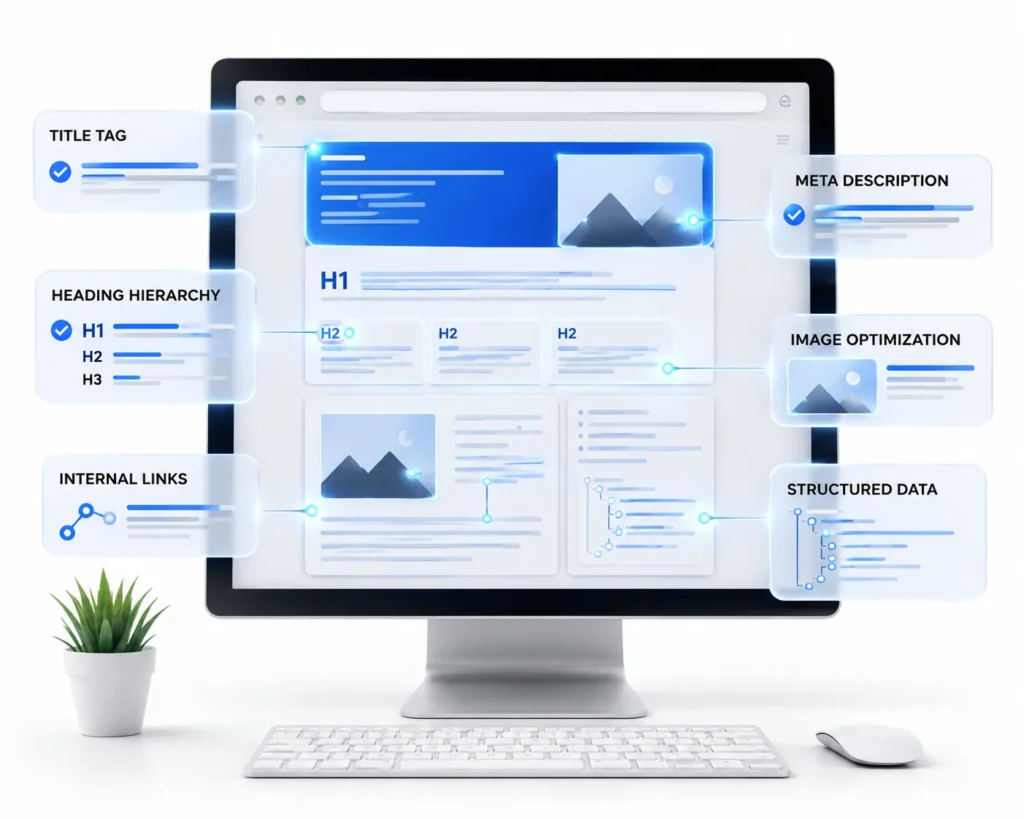
- Title tag includes the primary keyword + Naperville (under 60 characters)
- H1 matches the page’s target keyword
- Primary keyword appears in the first 100 words
- Meta description written (under 155 characters, includes keyword + CTA)
- At least one H2 and one H3 with related terms
- Images carry descriptive alt text (not “image001.jpg”)
- Internal links from the homepage and related pages
- LocalBusiness schema implemented and validated
- No duplicate title tags or H1s across the site
Reason 3 — Too Few (or the Wrong) Backlinks
Backlinks — links from other sites pointing to yours — are among Google’s most powerful trust signals. They act as votes of confidence from the rest of the web.
A business with zero or very few links is asking Google to rank it on page 1 against competitors that have dozens of quality links pointing their way. That’s a steep ask.
The Naperville Link Landscape
The local ecosystem here offers link opportunities that many businesses completely overlook:
- Naperville Area Chamber of Commerce. Membership usually includes a linked directory profile — one of the highest-authority local links available to any business in the area.
- Downtown Naperville Alliance. A member directory with linked business profiles, strong on both local relevance and authority.
- Local press — the Naperville Sun and the Chicago Tribune’s Naperville coverage. A mention in a community feature or business roundup earns a link from an authoritative local source.
- Community sites and neighborhood groups. Nextdoor business pages, community organization sites, and school or sports-league sponsor pages.
- Industry associations with Illinois chapters. Many trade groups maintain member directories. A link from an Illinois plumbing or contractor association carries real niche authority.
- Suppliers and partners. If you work with local wholesalers or professional partners, ask to be listed on their sites. These are contextually relevant, editorially given links.
- A competitor backlink gap analysis. Use a tool like Ahrefs or Moz to find sites that link to your top rivals but not to you. That gap list is your most targeted outreach roadmap.
A family dentist on page 2 often shares one trait with the page-1 practice above them: the page-1 practice holds a Chamber listing, a mention in a local “best of” community feature, and two or three partner links. None of that requires a big budget — just a deliberate month of local outreach.
Chasing volume over relevance. Fifty generic directory submissions rarely move the needle. One link from the Naperville Sun or the Chamber can outweigh all of them.
In most local categories here, you don’t need hundreds of links. A handful of high-quality, locally relevant ones — Chamber, local press, an industry association — usually beats a pile of generic directories. Prioritize quality and local relevance over raw count.
Reason 4 — Technical SEO Problems Are Capping Your Rankings
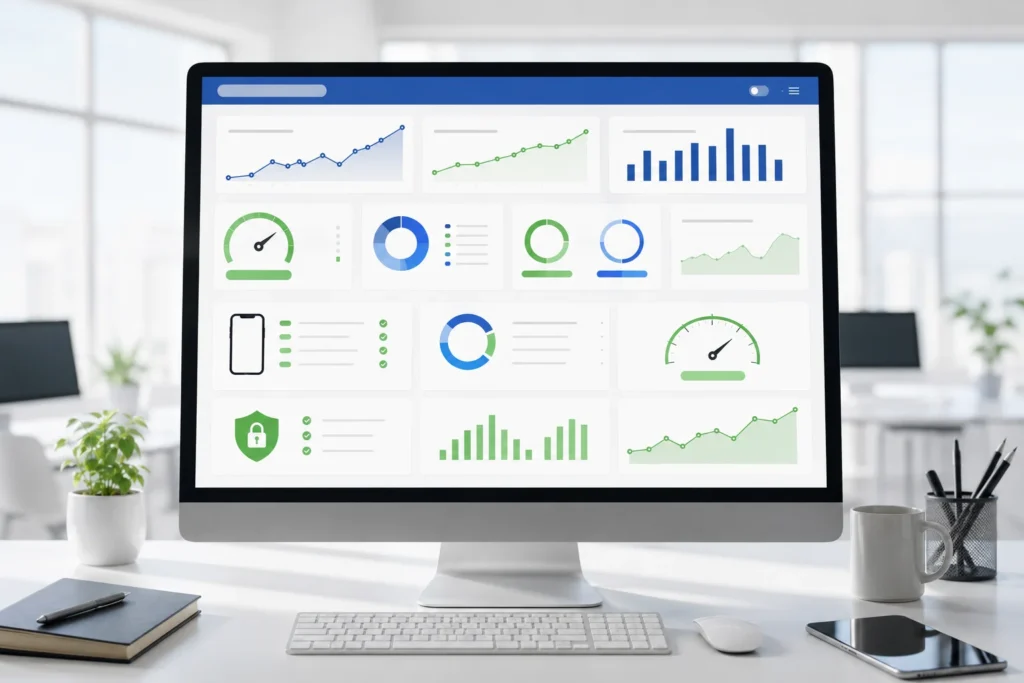
Technical issues are invisible to your customers but very visible to Google. A site that loads slowly, throws crawl errors, isn’t mobile-friendly, or duplicates content will struggle to reach page 1 no matter how good the writing is.
The Technical Issues That Most Often Cause Page 2
- Slow page speed. Core Web Vitals are ranking factors. A page that takes more than three seconds to load on mobile is at a disadvantage — usually because of unoptimized images or an outdated platform.
- A poor mobile experience. Google uses mobile-first indexing, so it judges your site on the mobile version. A site that looks fine on desktop but clunky on a phone is being graded on its worst version.
- Crawl errors. 404s, overlong redirect chains, or pages wrongly blocked in robots.txt all stop Google from indexing your content correctly.
- Duplicate content. Two pages targeting the same keyword, or a site reachable at both www and non-www without a canonical tag, splits your ranking signals instead of concentrating them.
- Missing HTTPS. Sites still on HTTP are flagged “not secure” in Chrome and carry a small ranking penalty. In 2026, this is a baseline trust signal — non-negotiable.
- Broken internal links. Links pointing to pages that no longer exist leak link equity and frustrate visitors.
How to Run a Quick Technical Audit
- Open Google Search Console (free) — check Pages for crawl and indexing errors and review Core Web Vitals.
- Run your site through Google PageSpeed Insights — aim for 70+ on mobile.
- Search site:yourdomain.com in Google — confirm how many pages are indexed and that nothing odd is showing up.
- Open your site on an actual phone — is every element tappable? Does content fit without horizontal scrolling?
- Confirm HTTPS is live and that http:// redirects to https://.
Before adding new content, rule out an accidental noindex tag or a robots.txt rule blocking key pages. We’ve seen businesses pour months into content while a single misplaced line quietly kept their best pages out of Google entirely.
Reason 5 — An Underoptimized Google Business Profile
For a local business, your Google Business Profile isn’t just a map listing—it’s a ranking signal for both the local pack and local organic results. See how a fully optimized profile looks by visiting Zolqix Digital’s Google Business Profile.
The GBP Gaps That Quietly Suppress Local Rankings
- The wrong primary category. The most impactful single field. A broad category like “Contractor” instead of the specific, accurate “Roofing Contractor” cuts your eligibility for relevant searches.
- An incomplete profile. Missing hours, no description, no listed services, no photos. Google reads completeness as a sign of legitimacy and relevance.
- NAP inconsistency. When your name, address, and phone number on GBP don’t exactly match your website, even minor variations create trust ambiguity.
- Stale reviews and no responses. A profile with eight reviews from 2022 looks inactive. Steady review generation and consistent responses signal a live, engaged business.
- No recent posts or photos. Active profiles outperform dormant ones for the same reason — they signal a managed, working business.
An HVAC company listed under the generic “Contractor” category kept missing “furnace repair Naperville” searches entirely. Switching the primary category to “HVAC Contractor,” filling in services, and adding photos is exactly the kind of fix that moves a profile into the local pack within weeks — no website changes required.
Here, GBP work often delivers faster results than content or link building, because the competition — while real — is lighter than in Chicago proper. Based on audits of local businesses, a full GBP cleanup on a previously neglected profile frequently produces visible movement within roughly six to eight weeks.
Reason 6 — You’re Targeting the Wrong Keywords
Keyword mistakes trap businesses on page 2 from two opposite directions: aiming too high, or aiming at terms nobody searches.
Too Competitive
Targeting “lawyer,” “dentist,” or “plumber” with no geographic qualifier drops you into national or Chicago-metro competition. Those pages are dominated by aggregators — Yelp, Angi, Healthgrades, Avvo — and large firms with years of authority.
A solo Naperville attorney won’t win “personal injury lawyer” nationally on a small-business budget.
go local and specific. “Personal injury attorney Naperville,” “car accident lawyer Naperville IL,” and “slip and fall attorney DuPage County” are all winnable, because local authority outweighs national domain strength.
Too Obscure
The opposite trap: optimizing for language nobody types. “Bespoke residential illumination solutions Naperville” might describe your lighting business beautifully, but ranking for a phrase with no search volume accomplishes nothing.
lean on free tools. Google Search Console shows the queries already bringing impressions to your site. Google’s autocomplete and the “People Also Ask” boxes reveal what real people search. Those are your genuine opportunities.
The Naperville Keyword Sweet Spot
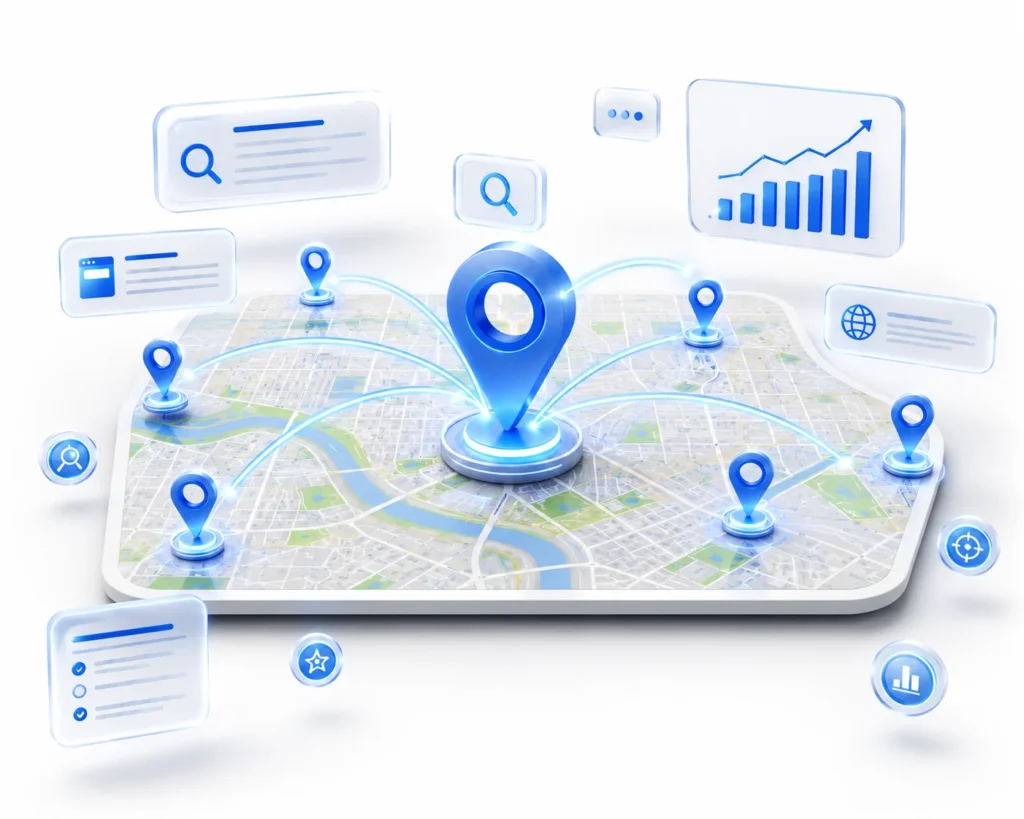
For most businesses here, the highest-opportunity keywords follow these patterns:
- [Service] + Naperville — “HVAC repair Naperville,” “family dentist Naperville,” “estate attorney Naperville”
- [Service] + Naperville + qualifier — “emergency plumber Naperville,” “24-hour locksmith Naperville,” “pediatric dentist Naperville IL”
- [Service] + nearby communities — Aurora, Bolingbrook, Lisle, Wheaton, Plainfield; many businesses serve these areas and miss easy rankings by never creating content for them
- Question-based local keywords — “how much does [service] cost in Naperville,” “best [service] near Naperville”; these capture research-phase searchers who convert at high rates
- Does the term include a location? No → add Naperville, the ZIP, or a nearby community.
- Does anyone actually search it? Unsure → check Search Console impressions and Google autocomplete.
- Is page 1 owned by national aggregators? Yes → go more specific or more local.
- Are you already ranking 11–20 for it? Yes → that’s your fastest win. Start there.
Reason 7 — Competitors Are Simply Doing More Right
Sometimes there’s no single smoking gun. You’re on page 2 because the businesses on page 1 are doing more things well — more content, more links, cleaner technical SEO, more reviews, more profile activity. The fix here is a systematic gap analysis.
How to Reverse-Engineer Page 1
- Search your primary keyword + “Naperville” and identify the top three organic results — not ads, not the map pack.
- Open each page and note word count, structure, how many questions it answers, and the keywords used in its title tag and headers.
- Check their backlink profiles with a free tool like Moz Link Explorer or the Ahrefs free tier — how many referring domains do they have?
- Review their Google Business Profiles — review count, recency, and completeness.
- Find the gaps. Whatever they’re doing that you aren’t is your action plan.
One pattern we consistently identify Businesses on page 2 are usually outcompeted on content depth first and backlinks second. Close the content gap before the link gap — it’s faster, cheaper, and lays the foundation everything else builds on.
What Makes Naperville’s Search Market Different From Chicago
Naperville isn’t a smaller Chicago. It has a distinct search landscape that shapes strategy in real ways.
- Lower competition, higher attainability. Most categories here face far less competition than equivalent Chicago searches. Page 1 is realistic within three to six months of consistent work, versus six to eighteen months in Chicago’s toughest neighborhoods.
- Suburban search behavior. Searchers here often add a city, ZIP, or nearby-community qualifier — “dentist 60540,” “plumber near Naperville,” “contractor Naperville IL.” Optimize for these variants, not just the bare city name.
- DuPage County context matters. Many businesses serve the broader county. County-level references in your content and profile signal wider service-area relevance without diluting your Naperville rankings.
- The Naperville–Aurora crossover. Naperville borders Aurora, Illinois’s second-largest city. West-side businesses often rank for Aurora searches and vice versa. Capturing both deliberately can meaningfully widen your footprint.
- A higher-income demographic. The local audience skews toward higher-income households. Content that signals quality, professionalism, and expertise tends to outperform price-first messaging here.
Your 30-Day Plan to Move From Page 2 to Page 1
Once you’ve identified your root cause, here’s a sequenced month to start moving the needle.
Week 1 — Diagnose and Fix Quick Wins
- Open Google Search Console and find your highest-impression page-2 keywords (positions 11–20).
- Fix every title tag — include the keyword + Naperville on each page.
- Correct your GBP primary category if it’s wrong.
- Fill every empty field on your profile.
- Clear any HTTPS issues or obvious crawl errors flagged in Search Console.
Week 2 — Build Content Depth
- Pick your most important service page — the one targeting your highest-value keyword.
- Expand it to match or beat the depth of the top three competitors.
- Add an FAQ section answering the five questions customers ask most about that service locally.
- Weave in Naperville context: neighborhoods, landmarks, community ties.
- Implement or fix LocalBusiness schema on the page.
Week 3 — Reviews and Citations
- Send review requests to your last 20 customers with a direct GBP link.
- Fix NAP inconsistencies across Yelp, Facebook, Apple Maps, and Bing Places.
- Join the Naperville Area Chamber of Commerce and claim your directory listing.
- Identify two or three more local link opportunities and start outreach.
Week 4 — Monitor and Iterate
- Revisit Search Console — have impressions moved for your target keywords?
- Set a baseline with a rank tracker like BrightLocal or Semrush.
- Choose the next service page to expand, based on search volume and competition.
- Set a monthly review goal and brief your team on asking for reviews in person.
30-Day Priority Checklist
- Title tags fixed across all pages
- GBP primary category corrected
- GBP profile 100% complete
- Top service page expanded to 800+ words with Naperville context
- FAQ section added to the top service page
- LocalBusiness schema implemented
- NAP consistent across Tier 1 directories
- Review request system launched
- Chamber of Commerce listing secured
- Rank-tracking baseline established
Frequently Asked Questions
How long does it take to move from page 2 to page 1 in Naperville?
It depends on your root cause and how competitive your category is. When the problems are obvious and fixable — wrong title tags, an incomplete profile, thin content — movement often shows within four to eight weeks. In more established categories where competitors have built years of authority, three to six months is more realistic. The encouraging part is that Naperville sits well below Chicago in competition, so page 1 tends to come faster here than in the city for most local categories. Start by fixing the highest-impact items first, then let the results compound over the following weeks.
Why am I ranking on page 2 for some keywords but not others?
This usually reflects uneven optimization across your site. Pages you’ve invested more time in naturally rank better, while neglected ones lag. It can also reflect keyword difficulty — some of your targets simply face stronger competition than others. The good news is that the keywords where you’re already sitting at positions 11–20 are your best opportunities. You’re close to page 1 already, so focused improvements to those specific pages — stronger title tags, deeper content, a few relevant links — can tip them over the edge faster than chasing brand-new terms from scratch.
Can I reach page 1 without hiring an SEO agency?
Yes, especially in a moderate-competition market like Naperville. The tasks that actually move rankings — fixing title tags, expanding content, completing your Google Business Profile, gathering reviews, joining the Chamber — are all things a motivated owner or in-house team member can handle. The real challenges are time and prioritization: knowing which fixes matter most and doing them in the right order. An agency speeds things up and brings tools and pattern recognition, but it isn’t the only path. Many local businesses make real progress on their own by following a clear, sequenced plan like the 30-day roadmap above.
Does social media help me rank higher on Google?
Not directly — social signals aren’t a confirmed Google ranking factor. That said, active profiles can help indirectly in several ways. They build brand awareness, which increases branded searches that Google reads as a positive signal. They can earn local press mentions and backlinks. And they drive traffic that creates engagement signals. So posting more on Facebook won’t move your ranking on its own, but a consistent social presence supports the broader ecosystem of trust and visibility around your business. Treat social as a complement to your SEO work, not a substitute for it.
How many backlinks do I need to rank on page 1 in Naperville?
In a moderate-competition environment like this one, most categories don’t require a large backlink portfolio. A handful of high-quality, locally relevant links is often enough to compete — think Chamber of Commerce, a local press mention, an industry association, and a few partner listings. Quality and local relevance matter far more than raw volume. A single link from the Naperville Sun carries more weight than fifty generic directory submissions. Rather than chasing a number, focus on earning the few links that genuinely signal you’re an established, trusted part of the local business community.
My competitor has fewer reviews than me but ranks higher. Why?
Reviews are one signal among many, not the whole picture. Your competitor may have stronger content, better backlinks, a more complete Google Business Profile, faster page speed, or cleaner technical SEO — any of which can outweigh a review-count advantage. Reviews genuinely help, but they don’t override every other factor. If you’re winning on reviews yet still ranking lower, audit the rest of the picture: content depth, on-page optimization, your backlink profile, and technical health. Somewhere in those areas, the competitor is doing something you aren’t, and closing that specific gap is what will move you up.
Why did I drop from page 1 to page 2?
A handful of causes account for most ranking drops. A competitor may have improved their optimization and overtaken you. Google may have run a local algorithm update. Your site may have hit a technical snag — a page going down, an accidental noindex tag, or a hosting issue. Your review recency may have stalled, with no fresh reviews for months. Or someone may have edited your Google Business Profile. Start by checking Search Console for crawl errors, review your profile for unauthorized changes, and compare your review recency against your top competitors. The cause is usually identifiable once you know where to look.
Does having a blog help me rank higher?
Yes, when it’s done well. Blog posts that answer questions your customers actually search — “how much does a water heater replacement cost in Naperville,” “when should I replace my roof in Illinois” — build topical authority, attract backlinks, and can win featured snippets. Content published for its own sake, with no connection to your services or location, adds little. The key is relevance and usefulness, not frequency. A handful of genuinely helpful, locally focused posts will do far more for your rankings than a steady stream of generic articles that never touch what your customers care about.
What’s the single fastest thing I can do to improve my ranking?
Fix your title tags. It’s the highest-impact, fastest-to-implement on-page change available. If your titles don’t include your target keyword and “Naperville,” update every page today — it’s a same-day task with outsized returns. The second fastest lever is completing and correcting your Google Business Profile: the right primary category, full business details, and current photos. Both changes can produce visible movement within four to six weeks. Because they’re quick and low-cost, these two fixes are almost always the right place to start before investing in deeper content or link-building work.
Is Naperville SEO different from Chicago SEO?
Yes, in ways that should shape your strategy. Naperville has lower competition in most categories, so page 1 is more attainable with a smaller investment of time and money. Searchers here also use suburban patterns — city name, ZIP code, DuPage County — that call for localization beyond generic “Chicago metro” targeting. And the market rewards quality and professionalism signals more strongly than pure price competition, thanks to the area’s higher-income demographic. Treat Naperville as its own market with its own search behavior, rather than scaling down a Chicago playbook, and your optimization choices will line up much better with how local customers actually search.
Do I need a separate website if my business serves both Naperville and Aurora?
No — one website can target both cities effectively through dedicated location pages. A page optimized for “plumber Aurora IL” alongside another for “plumber Naperville IL” lets you compete in both markets without the cost and complexity of maintaining two sites. The important thing is that each page carries original content specific to that city, not just a template with the city name swapped out. Mention local neighborhoods, landmarks, and service details unique to each area. Done right, this approach captures the valuable Naperville–Aurora crossover and widens your reach across nearby communities from a single, well-structured domain.
How do I find out which keywords I’m currently ranking for?
Google Search Console is the best free tool for this. Open Performance → Search Results and look at the Queries tab. It shows every keyword bringing impressions to your site, your average position, and your click-through rate. Pay special attention to queries where you’re averaging positions 11–20 — those are your page-2 opportunities, close enough to page 1 that targeted optimization can move them up. Reviewing this data regularly also tells you which terms Google already associates with your business, which often surfaces opportunities you hadn’t thought to target. Make this report a monthly habit and let it guide where you invest next.

Not Sure What’s Holding You Back? Start With a Free Audit.
Page 2 almost always has a specific, diagnosable cause. The businesses that reach page 1 aren’t necessarily better at what they do — they’ve simply fixed the right things in the right order. If you’re not sure where to begin, an audit removes the guesswork.
Zolqix Digital provides free local SEO audits for Naperville businesses. We analyze your website, your Google Business Profile, your current rankings, and your competitors — then hand you a clear picture of exactly what’s keeping you off page 1 and what to fix first.
Discover what’s preventing your page 1 rankings. We’ll review your rankings, on-page SEO, profile, citations, and competitor gaps — and tell you precisely what’s holding you back. Delivered within 48 hours. No obligation.
Request Your Free Naperville SEO Audit
Get a personalized action plan. Talk through your business, your category, and a realistic roadmap to page 1 with a local SEO specialist.
Book Your Free 30-Minute Strategy Call
Questions? Reach us at hello@zolqix.com or zolqix.com
About the Author
Zolqix Digital — Naperville & Chicago Local SEO
This guide was produced by the Zolqix Digital local SEO team, which specializes in helping small and mid-sized businesses across Naperville, DuPage County, and the greater Chicago suburbs earn page-1 visibility in local search.
Our work focuses on the areas that move rankings for local businesses: on-page optimization, local content strategy, Google Business Profile optimization, technical SEO, and locally relevant link building. The recommendations in this article reflect patterns we consistently identify across hands-on audits of suburban Illinois businesses — not theory, but the specific, fixable issues that separate page 2 from page 1.
Areas of specialization: local SEO, Google Business Profile optimization, on-page and technical SEO, local content strategy, and competitive gap analysis for suburban service-area businesses.
Written by
zolqix — Zolqix
Digital marketing team running local SEO, Google Ads, and growth campaigns for Chicago-area businesses. We write from what we see in active accounts.
Free — $500 value
Ready to rank
in Chicago?
Get a written audit showing exactly what’s holding back your local rankings. No call. No pitch.
No credit card • Written report within 24 hours • No obligation